I once planned a Grade 5 inquiry that seemed to include everything. There was design thinking, persuasive writing, data analysis, teamwork, reflection, and a community presentation. On paper, it looked like a rich unit. By the third week, I was less convinced. Students were busy, but I couldn't see enough careful thinking to justify all the activity.
It is easy to keep adding to a unit. An interesting resource turns up. A useful curriculum connection presents itself. Another activity would make a good display. Each addition can be reasonable on its own, and the whole thing can still become difficult to teach well.
I've become more willing to ask what a unit can leave out. That is an uncomfortable question when you have spent time planning something, especially if you are quite fond of it. But the time available doesn't expand with the plan. Something has to give, and too often it is the time students need to understand what they are doing.
Begin with understanding
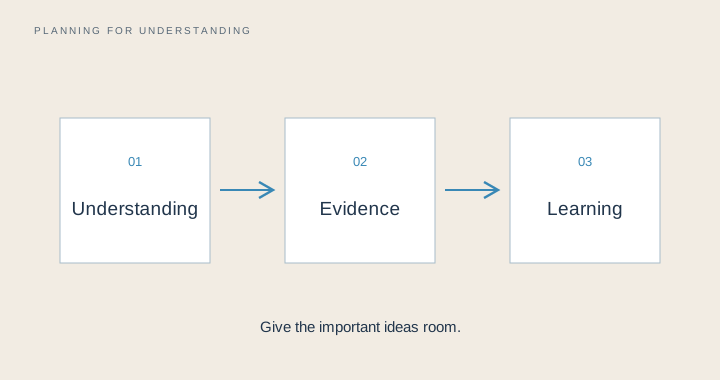
Wiggins and McTighe's Understanding by Design framework offers a useful discipline here: begin with the understanding and transfer you want, decide what would count as evidence, and then plan the learning. It asks us to justify activities by what they contribute. An activity can be enjoyable and still have a weak claim on the limited time in a unit.[1]
A clearer focus in practice
Our Grade 4 Pop-Up Restaurant made this clear to me. The first version stretched across economics, food science, advertising, nutrition, design, and more. Students enjoyed the project, but the understanding was shallower than I had hoped. The following year, we gave it a clearer focus: how economic choices affect people and communities, and how effective teams work together.
That focus helped us decide where to spend time. Discussions about pricing, budgeting, and what made a fair deal belonged at the centre. We could return to those ideas when students disagreed or needed to change a plan. The restaurant still involved plenty of different skills, but we were more deliberate about which understanding we were teaching and assessing.
School Without Walls raised a similar question. An outdoor education week offers more possibilities than we can reasonably examine in depth. Focusing on resilience, empathy, and problem-solving gave us something to return to after a difficult hike or a disagreement about sharing a room. Students had time to connect an experience to an idea, rather than simply move to the next activity.
Knowing what to keep
There are limits to simplification. We still have curriculum responsibilities, and students still need enough knowledge to think well about a topic. Removing essential content or support would make the unit weaker. The work is in distinguishing what students need from what we have included because we can.
School leaders have a part in making this possible. If every new priority brings another planning requirement, teachers have less room to make thoughtful choices. Clear priorities need to be accompanied by decisions about what can stop.
Before adding to a unit now, I want to be able to explain what the addition will help students understand and where the time will come from. If I can't answer those questions, it probably needs to wait.
References
Written by Tim Van Der Merwe.
Continue the conversation ↗